

ISO 7: Defining Cleanroom Classification Guidelines
What is an ISO 7 Cleanroom?
An ISO 7 cleanroom is a specialised controlled environment designed to regulate the concentration of airborne particulates. Under the international ISO 14644-1 standard, a cleanroom is defined as an enclosed space engineered, constructed, and operated to strictly limit the introduction, generation, and retention of microscopic particles.
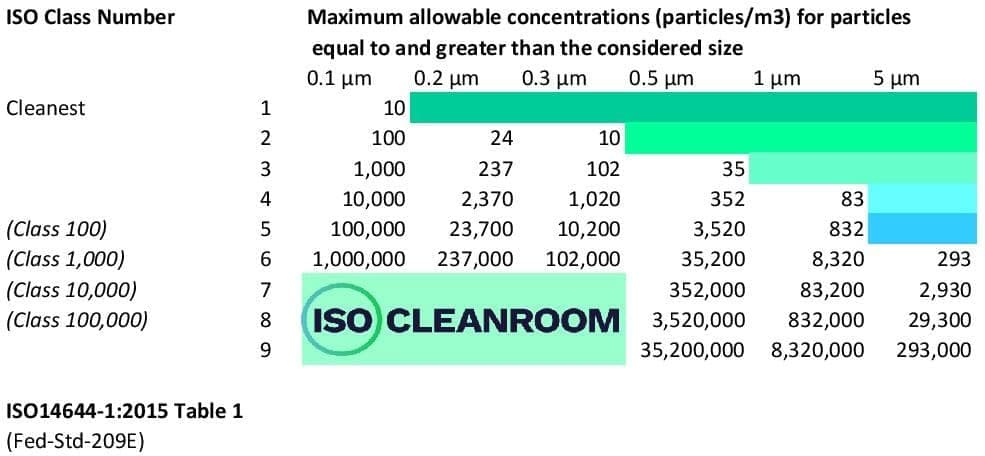
To achieve official ISO 7 classification, the environment must meet precise contamination thresholds when tested with a light-scattering particle counter. The air within the suite must contain fewer than the following maximum parameters:
- Particles 0.5 microns or larger: Maximum of 352,000 per cubic metre.
- Particles 5.0 microns or larger: Maximum of 2,930 per cubic metre.
Cross-Standard Equivalents
Depending on your industry or geographic region, you may hear an ISO 7 cleanroom referred to by alternative regulatory frameworks:
- US Federal Standard 209E: Known traditionally as a Class 10,000 cleanroom.
- EU GMP Annex 1: Equivalent to a Grade C classification, frequently specified for sterile pharmaceutical manufacturing stages.
Before finalising a facility design, it is critical to perform a thorough evaluation to identify the exact size and volume of particulates that could negatively impact your specific application, experiment, or manufacturing yield.
Why Do Industries Require an ISO 7 Cleanroom?
The ISO 7 classification is deployed across a vast array of technical sectors where sub-micron particles can compromise product integrity, safety, or functionality.
High-Specification Manufacturing
In electronics fabrication and advanced engineering (particularly facilities working with advanced composites), minor dust contamination can cause microscopic short circuits or structural weaknesses.How To Get an ISO 7 Cleanroom?
Life Sciences and Healthcare
Medical device manufacturers rely on ISO 7 environments to prevent particulate contamination on components that interact directly with patients. In the pharmaceutical sector, Grade C/ISO 7 spaces are heavily utilised for product filling lines and the preparation of solutions that face an elevated risk of environmental contamination.
Depending on your technical tolerances, you may find a more cost-effective solution in an ISO 8 cleanroom, whereas operations requiring higher precision will need to transition up to an ISO 6 cleanroom.
Technical Design and Construction Criteria
The ISO 7 cleanroom is the most frequently specified classification in modern industry. Because it requires fewer air changes than ultra-clean tiers (such as ISO 5), it offers a highly cost-effective balance between initial construction capital and ongoing operational energy consumption.
Key engineering requirements include:
- Airflow Volumetrics: An anemometer is used to verify that the facility achieves between 30 and 60 air changes per hour (ACH) using high-efficiency HEPA filtration.
- Pressure Dynamics: The layout must incorporate a physical airlock at all entry points. This configuration enables precise control over incoming and outgoing air to maintain a constant internal positive pressure boundary of +25 to +30 Pascals.
- Structural Materials: Common options include hardwall panels, monobloc systems, PVC, and glass. The defining requirement is that all internal surfaces must be perfectly smooth, non-porous, and highly resilient to aggressive chemical detergents to allow for straightforward decontamination.
Operational Maintenance and Protocols
Preserving the structural integrity of a Class 10,000 environment requires an ongoing commitment to facility care, rigorous environmental monitoring, and strict personnel discipline.
Core Maintenance Pillars
- Continuous Positive Pressure: Preventing unfiltered external air from migrating into the clean zone.
- Strict Material Controls: Restricting the types of items allowed inside the facility.
- Mandatory PPE: Ensuring all staff act as effective barriers against human shedding.
- Scheduled Plant Audits: Conducting routine filter evaluations and airflow checks.
Essential Cleanroom Do's and Don'ts
- Do clean and wipe down all internal surfaces systematically in accordance with your validated SOP.
- Do ensure all access doors remain completely closed to preserve the positive pressure barrier.
- Do thoroughly sanitise all machinery, tools, and components before introducing them to the cleanroom.
- Do confirm that all operators wear full Personal Protective Equipment (PPE) over their standard clothing prior to entry.
- Don't bring non-essential items or unapproved materials into the controlled zone.
- Don't overload or crowd the floor area, as this disrupts the engineered airflow paths.
- Don't permit consumption of food, drinks, or gum inside the facility.
- Don't turn off the HEPA fan filter units, as cutting the power compromises pressure boundaries and allows airborne particles to settle.
Are you looking to install or upgrade a controlled environment? Contact our specialist engineering team today to review your project requirements and design options.
