

HEPA Filter Testing: The Difference Between AHU-Mounted and Terminal HEPA Filters
In the precision-driven world of controlled environments, High-Efficiency Particulate Air (HEPA) filters are the primary line of defence against microscopic contaminants. However, the efficacy of these filters is only as reliable as the testing protocols used to verify them. HEPA filter testing, often referred to as Filter Integrity Testing (FIT) or Dispersed Oil Particulate (DOP) testing, is a mandatory requirement for regulatory compliance across the pharmaceutical, biotechnology, medical device, and semiconductor industries.
While the fundamental goal is to ensure no leaks exist, the methodology, diagnostic sensitivity, and maintenance implications differ significantly depending on the filter's location. This article explores the critical distinctions between Terminal HEPA filters and AHU-mounted HEPA banks, providing a comprehensive roadmap for maintaining compliance with ISO 14644-3 and EU GMP Annex 1.
The Fundamentals of HEPA Filter Integrity Testing (FIT)
Before examining specific hardware configurations, it is essential to establish the principles of integrity testing. Unlike a simple particle count, which measures general air cleanliness at a specific point in time, an integrity test specifically verifies the filter media, the frame-to-media seal, and the housing gasket for bypass leaks.
The Mechanism of Photometer Testing
The industry standard for cleanroom testing involves the use of an aerosol photometer. The process requires three distinct components:
- Aerosol Generation: A challenge aerosol (typically PAO-4 or Ondina oil) is atomised into the upstream airflow using a thermal or cold generator.
- Upstream Measurement: The concentration of this aerosol is measured before it reaches the filter to establish a 100% baseline challenge.
- Downstream Scanning: The "clean" side of the filter is scanned to see what percentage of the aerosol has bypassed the filtration system.
Compliance with ISO 14644-3:2019
The updated ISO 14644-3:2019 standard provides the technical framework for these tests. It dictates everything from the types of aerosols permitted to the mathematical formulae used to calculate scan speeds. Adherence to these formulae is the difference between a valid certification and a failed audit.
Terminal HEPA Filter Testing: The Gold Standard for High-Grade Cleanrooms
In Grade A, B and C (ISO 5, 6, 7) environments, and most Grade D (ISO 8) facilities, HEPA filters are installed terminally. This means the filter is the final component the air passes through before entering the cleanroom, usually mounted directly in the ceiling or within a specialised "separative device" such as a laminar flow cabinet, biosafety cabinet, or isolator.
Precision Scanning and Localisation
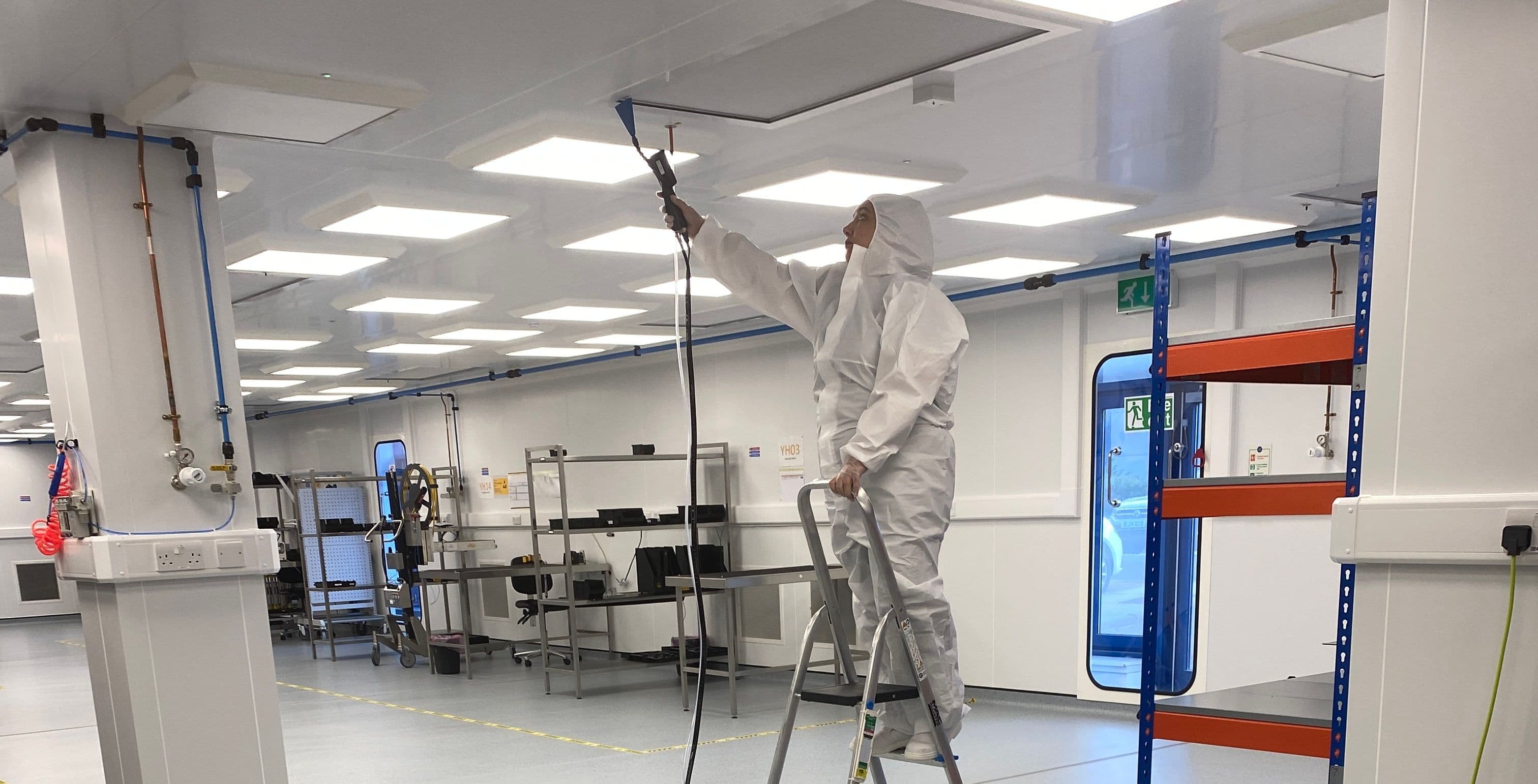
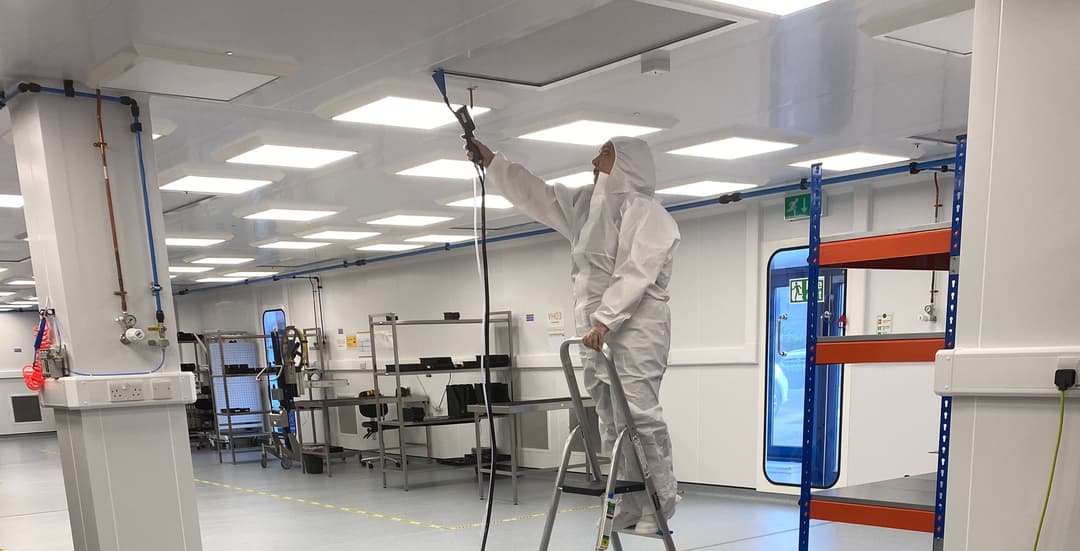
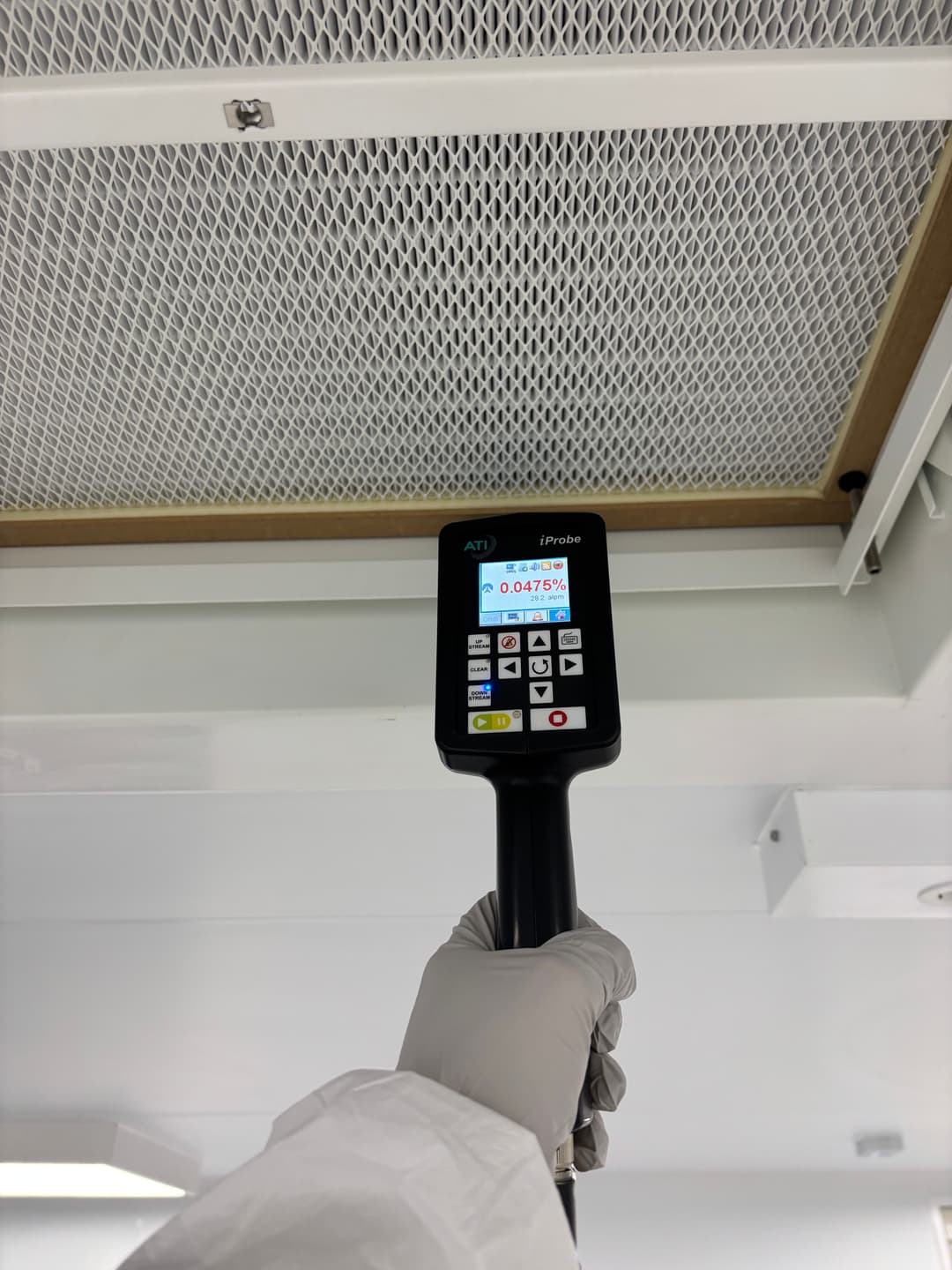
The primary advantage of terminal testing is the ability to perform a full surface scan. Using a digital photometer, such as the ATI 2i, a technician moves a probe across the entire downstream face of the filter.
- The Scan Pattern: The probe is held approximately 30 mm from the filter face. To ensure no gaps in coverage, the technician uses overlapping strokes.
- The Calculation: The scanning velocity is determined by the ISO-mandated formula:
Scanning velocity (cm/s) = 15 ÷ probe width (cm)
If the probe is 3 cm wide, the scan speed must not exceed 5 cm/s. Moving faster than this "critical velocity" risks missing small pinhole leaks, a common point of failure in non-specialist testing.
Advanced Diagnostics with the ATI 2i
Utilising the ATI 2i digital photometer allows for a standard challenge concentration of 5 mg/m³. While older analogue models often required much higher concentrations (up to 10 mg/m³) to maintain a reliable signal, modern digital equipment provides high-fidelity results with significantly less oil loading. This extends the life of the media and prevents "blinding" the filter with excess aerosol.
Validation Note: To confirm test validity, multiple upstream readings are taken before scanning to ensure a stable challenge. If the challenge concentration varies by more than plus or minus 15%, the test is invalid and must be repeated.
HEPA Filter Testing Within an AHU or Ductwork
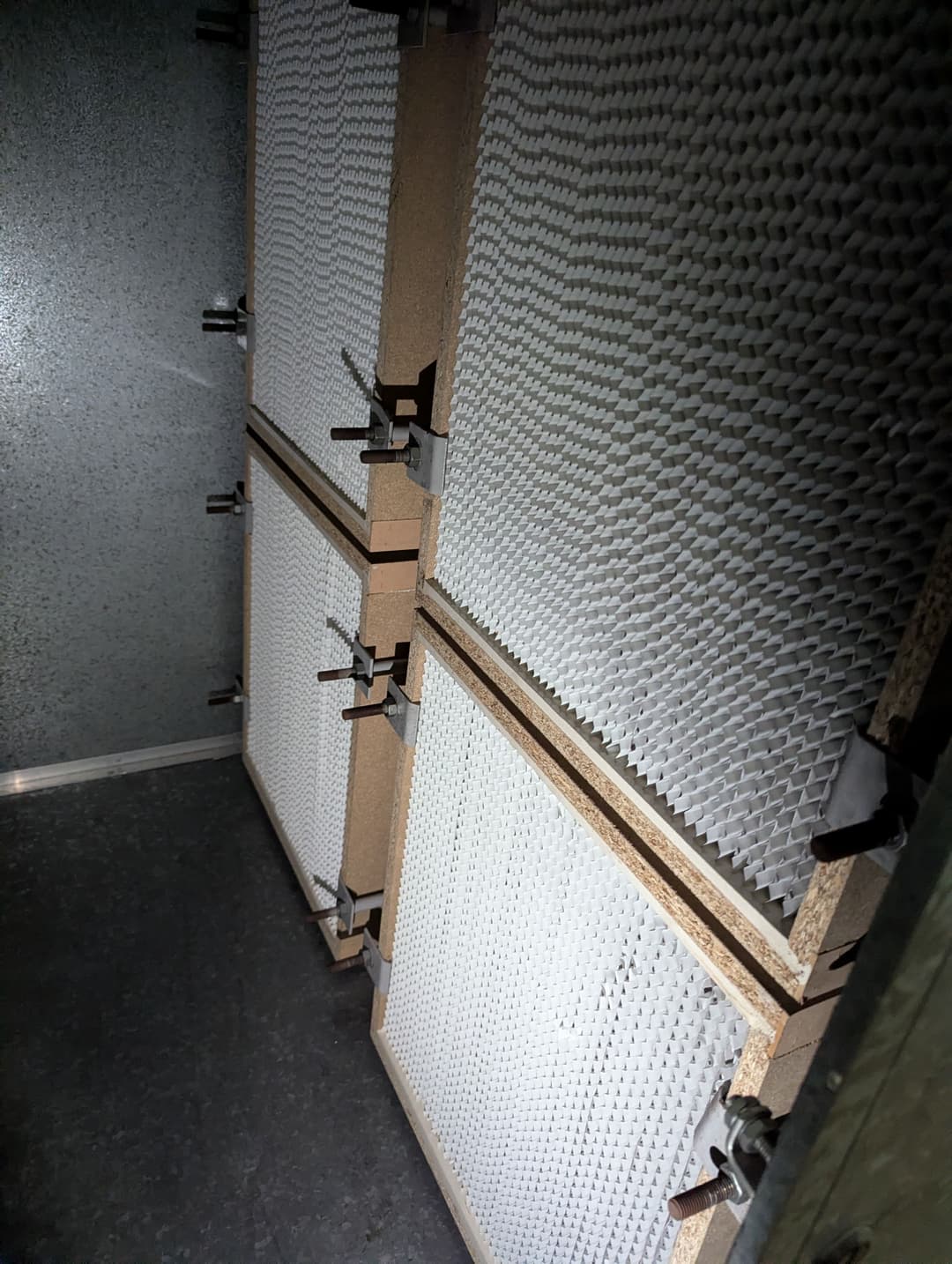
In many industrial applications or lower-grade cleanrooms (ISO 8 or 9), HEPA filtration is centralised. Here, the filters are located within the Air Handling Unit (AHU) or a dedicated filter housing positioned within the supply ductwork.
The Methodology of Volumetric Penetration Testing
Testing a filter bank inside an AHU is fundamentally different because the technician cannot physically scan the face of the filter while the system is under operational pressure. Instead, the focus shifts to volumetric penetration testing.
- Upstream Injection: The aerosol is injected sufficiently far upstream to ensure "homogeneity", ensuring the aerosol is evenly mixed across the entire face of the filter bank.
- Downstream Sampling: Since the media cannot be scanned, samples are taken from the ductwork downstream.
- Duct Access Points: ISO standards recommend specific placement for test ports to ensure accurate readings:
- Primary Port: Located approximately 300 mm downstream of the HEPA bank.
- Secondary Port: Located 1000 mm downstream to allow for air stabilisation and thorough mixing.
Limitations of AHU-Mounted Testing
The most significant drawback to this configuration is the lack of diagnostic resolution. If the photometer detects a leak in a duct-mounted system, it indicates that a leak exists, but not where it is located. The failure could be a hole in the filter media, a failed gasket, or a bypass leak in the metal framework of the AHU itself. Therefore it can be an wasteful/ expensive procedure to rectify.
Acceptance Criteria: H13 vs. H14 Filters
Regardless of whether a filter is in the ceiling or the plant room, the industry-standard acceptance criteria remain consistent, governed by EN 1822 and ISO 29463 classifications.
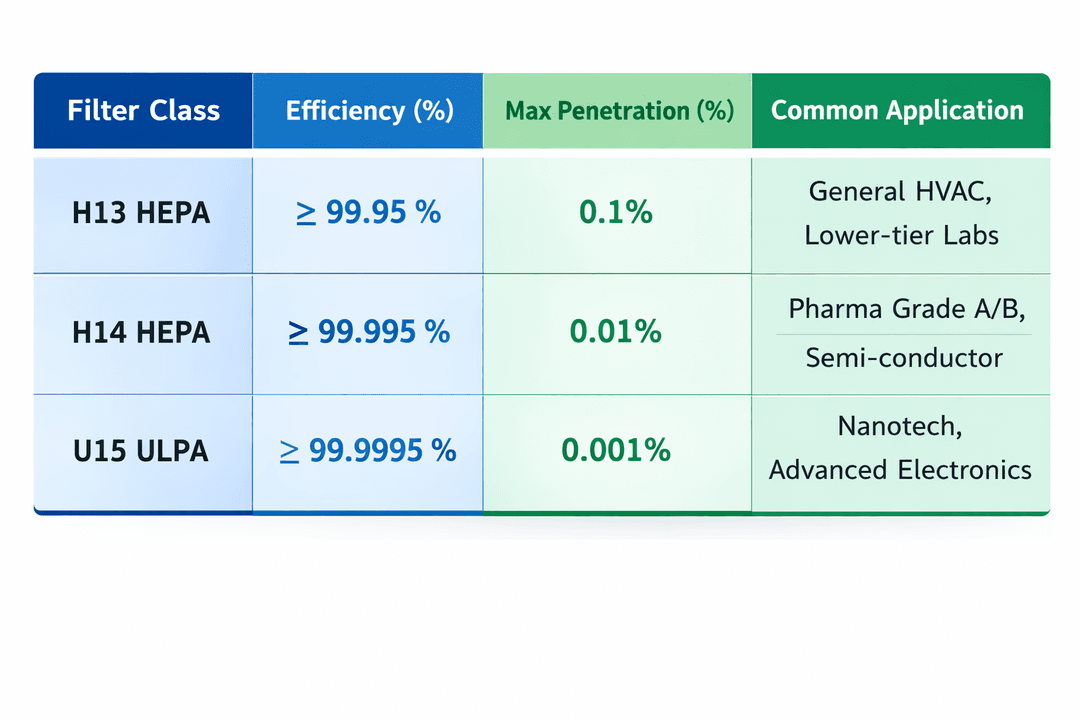
For most ISO rated cleanrooms, a leak is defined as any localised penetration exceeding 0.01% of the upstream challenge. The limits in a GMP facility could well be more stringent. Meeting these limits is essential for maintaining cleanroom classification and demonstrating regulatory compliance during inspections.
Diagnostic Sensitivity: Why Filter Location Matters for ROI
From a maintenance and operational perspective, the choice between terminal and AHU-mounted filters is a balance between initial capital expenditure and long-term diagnostic precision.
Repairing Terminal Filters
When a leak is identified in a terminal HEPA filter, the technician can pinpoint the exact square centimetre of the failure.
- Patching: Under ISO 14644-3, small leaks in the media can often be "patched" using an approved silicone sealant, provided the total area of repairs does not exceed 5% of the filter face and no single repair exceeds a specific size.
- Targeted Action: If the leak is in the gasket, the technician can simply replace the seal or adjust the housing tension.
The AHU "Blind Spot"
If a leak is detected in an AHU bank, the diagnostic process is arduous and often requires a complete system shutdown. Technicians must enter the AHU to perform a "static" scan or check seals with mirrors and torches. Because the exact leak is difficult to identify, facilities are often forced to replace the entire bank of filters to ensure the leak is eliminated, leading to significant unnecessary costs and extended downtime.
Essential Compliance Checklist for Facility Managers
To ensure your HEPA testing programme meets the requirements of the MHRA, FDA, or other regulatory bodies, verify the following:
- Aerosol Mixing: Ensure the upstream challenge is truly uniform. Without a uniform challenge, downstream readings are statistically invalid.
- Isokinetic Sampling: Verify that the correct probe size is used to match the airspeed, preventing "sampling bias" where larger particles may be missed.
- Aerosol Dilution: In high-concentration environments, use an aerosol diluter to protect the photometer’s sensor and ensure linear readings.
- CTCB-I Certification: Testing should be carried out by engineers certified by the Cleanroom Testing and Certification Board - International.
- Calibration Traceability: All instruments must have valid calibration certificates traceable to national standards.
Design Strategies: Choosing the Right Configuration
While terminal HEPA filters are superior for testing and fault-finding, they require a higher initial investment.
- Choose Terminal HEPA if: You are operating a Grade A, B, or C environment, require high air change rates, or cannot afford long periods of unplanned downtime. The ability to scan and repair filters in situ provides superior long-term ROI.
- Choose AHU-Mounted HEPA if: You are managing a Grade D cleanroom or a general "clean" space where particulate control is important but not critical to product safety. Be prepared for higher labour costs and broader filter replacements during failure investigations.
Professional Integrity Testing with ISO Cleanroom
HEPA filter testing is a specialised technical discipline. At ISO Cleanroom, we provide more than just a pass/fail certificate; we provide the assurance that your facility is operating at peak performance.
- Expertise in ISO 14644-3 & GMP: Our protocols are strictly aligned with the latest international standards and UK regulatory expectations.
- Calibrated Precision: Using industry-leading ATI 2i instruments, we provide the most accurate leak detection available.
- Highly Trained Engineers: Our team includes experienced test engineers certified to CTCB-I Professional level.
- Auditable Reporting: We provide clear, auditable documentation suitable for all regulatory inspections.
- Practical Solutions: We offer cost-effective solutions for non-compliant systems, including patch repairs and system optimisations.
The distinction between terminal and AHU-mounted HEPA filter testing is ultimately the difference between localised diagnostics and system-wide verification. Maintaining a rigorous testing schedule is the only way to ensure that your controlled environment remains truly under control.
HEPA Filter Testing Frequently Asked Questions (FAQs)
1. How often should HEPA filter integrity testing be carried out?
Under ISO 14644-2 and EU GMP Annex 1, the frequency of testing depends on the cleanroom grade. For high-risk environments (Grade A & B), integrity testing is typically required every 6 months. For lower-grade environments (Grade C & D), an annual test (12 months) is generally sufficient. However, testing should also be performed immediately following any filter replacement, structural maintenance, or if air quality deviations are detected.
2. Can a HEPA filter be repaired if a leak is detected during a scan?
Yes, provided the repair follows the guidelines set out in ISO 14644-3. A leak in the filter media can be "patch repaired" using an approved, out-gassing-resistant silicone sealant. However, the total area of all repairs must not exceed 5% of the filter face area, and no single repair can be larger than a specified dimension. If a leak is found in the gasket or frame seal, this usually requires mechanical adjustment or seal replacement rather than a media patch.
3. What is the difference between an aerosol photometer and a discrete particle counter (DPC)? While both tools measure particles, they serve different purposes. A photometer is used for integrity testing; it measures the mass concentration of an introduced aerosol (like PAO) to find specific leaks in the filter. A DPC measures the actual number of individual particles in the air to determine the overall cleanliness classification of the room. While ISO 14644-3 allows for the "DPC Method" for filter testing, the photometer method remains the industry standard for its speed and sensitivity in pinpointing leaks.
4. Why is the "upstream challenge concentration" so important? The upstream challenge is the "known" amount of aerosol introduced before the filter. To accurately calculate a leakage percentage (e.g., the 0.01% threshold for H14 filters), the photometer must have a stable 100% baseline. If the concentration is too low, the photometer cannot distinguish a leak from background noise; if it is too high, it can prematurely "blind" or clog the filter media. Maintaining a stable concentration, typically between 5 mg/m³ and 80 mg/m³, is critical for a valid, auditable test.
