

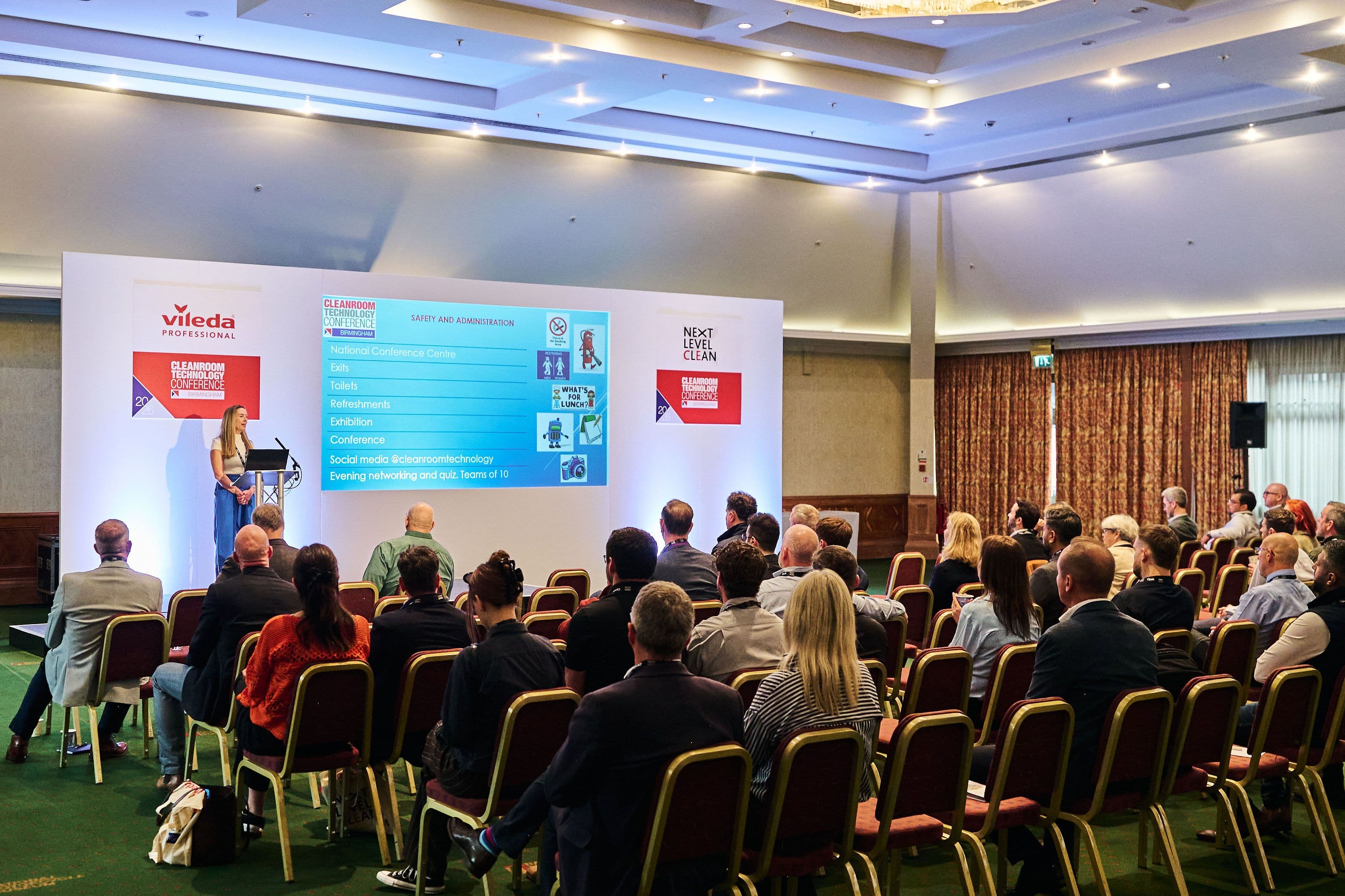
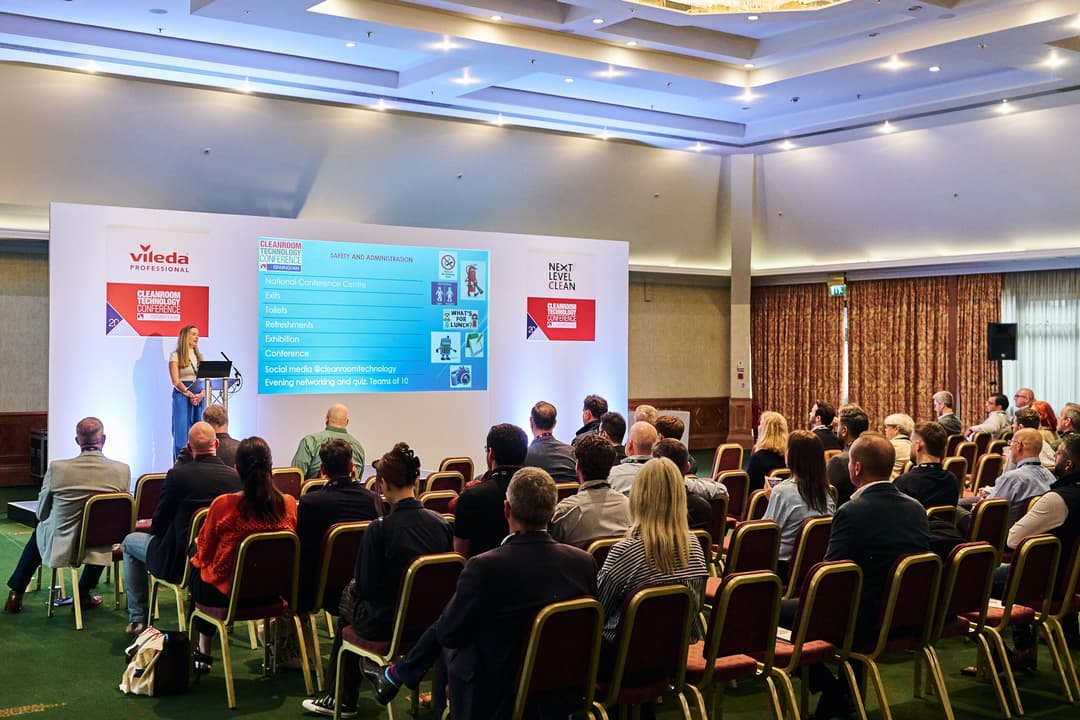
Key insights from Day 2 of the Cleanroom Technology Conference
There are so many aspects of our industry – and all are subject to change, so day two of the Cleanroom Technology Conference was a great way to check the latest in current thinking on a whole host of topics.
Even one of the most basic items in our armoury against contamination – the humble glove – was the subject of two very different presentations:
Glove selection and ESG considerations
Gonzague Vallière, Controlled Environment Segment Specialist at infection control specialist Halyard, delivered evidence-based guidance on glove lifecycles and regulations within the context of environmental responsibility and transparency.
When selecting between latex, vinyl, or nitrile gloves, organisations must consider raw material sourcing, production energy, and recycling feasibility. Manufacturing accounts for the vast majority of a glove's environmental impact due to energy-and water-intensive processes. However, sourcing from suppliers with strict water management policies and green energy usage mitigates this impact significantly.
Furthermore, the overall environmental impact of nitrile gloves is estimated to be 10% to 20% lower than that of latex when accounting for factors such as deforestation and biodiversity loss. This offsets the traditional view regarding synthetic glove biodegradability. Incineration with energy recovery remains the preferred end-of-life disposal route.
Addressing social responsibility requires equal scrutiny. With increased awareness surrounding forced labour and workplace safety, purchasing teams can make informed, ethical choices. Key recommendations for businesses include:
- Quality Assurance: Risk-assess operational requirements and maintain alignment with evolving regulations.
- HSE: Evaluate sustainability claims and set clear milestones for carbon footprint reduction.
- Procurement: Filter out suppliers unable to substantiate environmental and ethical claims.
Endotoxin control under EU-GMP Annex 1
Gloves are also key to our protection in some of the closest contact aspects of cleanroom processing, and a fundamental barrier to keeping out harmful endotoxins, found in the cell walls of bacteria such as E.coli.
This was the subject of the presentation given by Hanna De Neve Global Marketing Manager, Cleanroom for Swedish supplier of critical environment gloves Molnlycke. She covered the sources and pathways of endotoxin contamination on sterile gloves, and relevant GMP guidelines and patient safety as well as highlighting regulatory gaps and limitations in current glove qualification practices.
She outlined practical strategies for glove selection, supplier auditing, and endotoxin management within a Contamination Control Strategy (CCS) framework, noting:
"Endotoxins are not a theoretical risk; they are silent, invisible threats in cleanroom environments. Sterility alone is insufficient: a product or material can be sterile while still carrying endotoxins. While strict limits exist for products administered to patients, equivalent guidance does not exist for PPE entering the cleanroom. Controlling incoming materials is one of the most effective ways to protect product quality and patient safety."
And of course, having strict protocols about what comes into a cleanroom is not enough – because they are only effective if people follow them.
It was this aspect of cleanroom operation that was the focus of a presentation by David Wright of ParticlesPlus ®.
Managing the human factor in cleanrooms
Strict protocols are only effective when personnel adhere to them consistently. David Wright of Particles Plus® focused his presentation on managing people within controlled environments.
While Particles Plus® engineers particle counters and environmental sensors, David emphasised that cleanroom operations ultimately succeed or fail based on human behavior. Key pillars for operational success include:
- Clear communication: Explicit messaging before, during, and after tasks, with confirmation of understanding (such as requesting operators to repeat instructions). Signage should remain minimal and direct to prevent visual fatigue.
- Reinforced training: Shifting from annual events to a rolling programme that offers continuous, fresh reinforcement. Training must explain the overarching purpose and the risks associated with non-compliance. The goal is adaptable operators capable of making sound decisions when unexpected events occur.
- Continuous verification: While audits validate compliance on paper, direct observation is necessary to identify behavior confusion or shortcuts. Monitoring performance directly reinforces accountability and supports a culture of continuous improvement.
Cleanroom flooring: balancing investment and operational costs
Business Development Manager Akeel Ahmed from flooring specialist Kemtile offered a presentation focused on the surface beneath our feet in cleanrooms.
He explored the particular challenges it presents in pharmaceutical production – from compliance perspectives to long-term performance.
Resin floors, such as those provided by Kemtile, are one of the most popular choices because of their resistance to chemicals, abrasion, thermal shock and impact. Their easy-clean, slip resistant surfaces provide a safer work environment as does the ESD element which protects both people and equipment from electrostatic discharge.
However, as with many aspects of cleanroom design and build, there are variables and a range of issues to consider when drawing up a floor specification. One factor is the ratio of the initial construction investment (materials, installation, time etc) against the operational expenses across the lifecycle of the facility (commissioning /decontamination, repairs and associated downtime, future adaptability / scope to upgrade).
Preparing a Contamination Control Strategy under EU-GMP Annex 1
And of course, construction of a cleanroom is only part of the project: another key element being the preparation of a Contamination Control Strategy (CCS) which was the topic chosen by Danish GMP specialist Lene Blicher Olesen.
Her focus was on a CCS according to EU-GMP Annex 1, particularly the changes introduced in 2022 relating to the scope of Quality Risk Management which now applies across the whole document, not just certain paragraphs. Where specified limits or frequencies are cited, these should be considered as a minimum requirement.
In essence a Pharmaceutical Quality System (PQS) ensures that all activities are effectively controlled so that risk of contamination is minimised, but Risk Managment is used to identify, assess, reduce and control those risks. In drawing up a system in the context of risk, it is particularly important to stress objectivity, and not allow people’s bias to influence findings.
The CCS should define all critical control points in a facility and assess the effectiveness of all controls and monitoring measures, and this in turn establishes the assurance of contamination prevention.
Crucially, it should also be a living document, continuously reviewed and updated to drive continual improvements, and specifically when there are any changes to the process, product or production methods.
Cytotoxic facilities: integrated containment strategies
Cytotoxic manufacturing involves the highly specialised pharmaceutical production of drugs that are toxic to cells, primarily used in cancer chemotherapies.
Because these medications work by preventing cell replication or destroying cells, their production requires heavily contained environments, advanced aseptic technologies, and strict Good Manufacturing Practices (GMP), and in recent years, the emphasis has moved from being just about the drug, to protecting the operatives working to produce them too.
As Technical Director at Vetz Pharmaceuticals (providers of pet health products) Aqeel Ahmed Soomro explained in his presentation, these drugs are described as ‘highly potent’ and their risks to health come from their combination of their mutagenicity, carcinogenicity and reproductive toxicity.
Designing safe production spaces requires balancing two conflicting airflow objectives:
- Product protection: Achieved using positive pressure cleanrooms.
- Personnel protection: Achieved using negative pressure containment spaces.
Managing both simultaneously requires a layered protection model:
- Primary Containment: Isolators and Restricted Access Barrier Systems (RABS).
- Secondary Containment: HVAC architecture and airlocks.
- Tertiary Containment: Personal Protective Equipment (PPE).
While robotics and automation increasingly remove personnel from high-risk zones, continuous testing and monitoring remain mandatory. Containment must always be approached as a holistic system rather than an isolated room.
Putting insights into practice
As Founder and Director of Cheshire-based ISO Cleanroom, Toni Horsfield reflected:
"Technology and operational understanding are advancing rapidly across our sector. Events like this provide invaluable insights that inform our current cleanroom design, build, and validation practices while preparing us for future regulatory shifts."
To discuss your cleanroom design, construction, testing, or compliance requirements, contact Toni Horsfield on 0161 529 2816 or email sales@isocleanroom.co.uk.
