

Cleanroom Gowning
Cleanroom Gowning: Standard Operating Procedure (SOP)
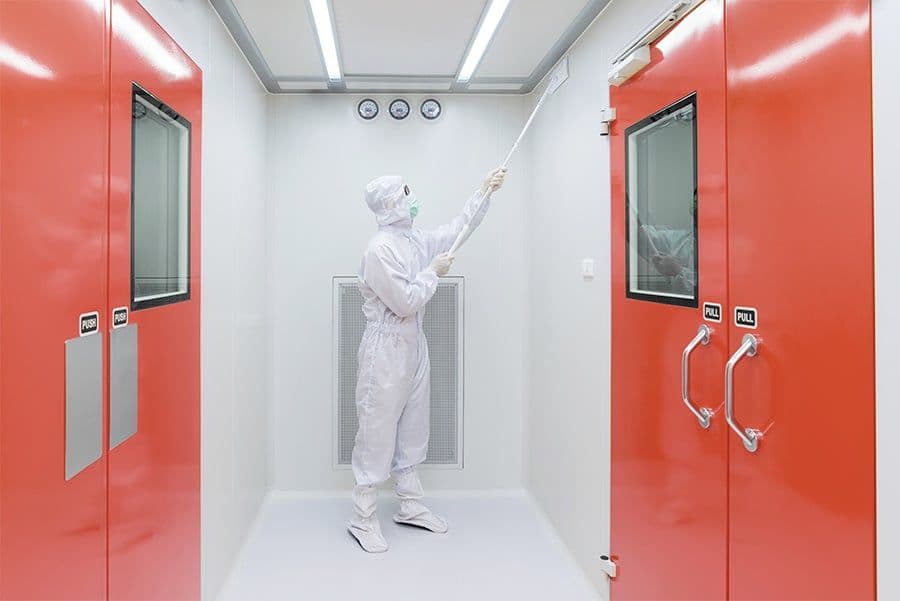
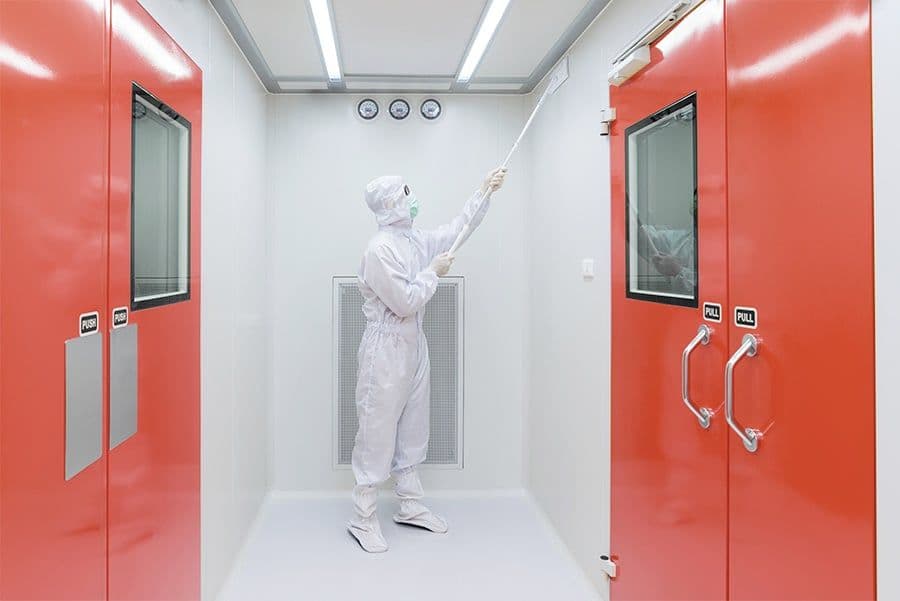
Cleanroom gowning is the disciplined process of putting on specialised protective clothing, in a set order, before entering a cleanroom, so that the people working inside add as few particles as possible to the controlled space. This post doubles as a standard operating procedure (SOP) you can adapt for your own site, covering the PPE, the preparation, and the step-by-step sequence your operators should follow.
People are the single biggest source of contamination in any cleanroom. We shed skin, hair, and respiratory droplets constantly, and that alone can account for up to 80% of the particles in a room. Gowning exists to contain all of it. Get the garments, the preparation, and the sequence right, and the room performs. Get any part of it wrong, and no amount of filtration will save you.
1. Purpose
To define the correct method for selecting cleanroom PPE and gowning before entry, so that personnel introduce the minimum possible contamination and the cleanroom holds its classified state.
2. Scope
This procedure applies to all personnel entering a classified cleanroom, and to visitors and contractors who require access. The PPE and pre-gowning rules apply across every ISO classification. The detailed gowning sequence in section 6 is written for an ISO 5 or ISO 6 cleanroom and should be adjusted to suit the requirements of your specific room and process. Operational discipline of this kind sits within ISO 14644-5, the international standard for cleanroom operations. For sterile and aseptic manufacturing, gowning also falls under EU GMP Annex 1.
3. Responsibilities
Operators and visitors are responsible for following this procedure in full on every entry. Supervisors are responsible for training, for confirming competence before unsupervised access is granted, and for challenging any breach. The quality function is responsible for keeping this SOP current and for periodic review.
4. Materials and equipment
The following should be in place before gowning begins:
- Sticky mat at the entrance
- Slippers for the transition into the gowning room
- Hair net or hood
- Face mask
- Coverall in sealed packaging
- Cleanroom footwear (shoe covers or cleanroom boots)
- Gloves, including an inner pair where double gloving is required
- Hot air dryer or lint-free wipes for hand drying
5. Choosing the right PPE
Selecting the right PPE comes before any question of technique. Across every classification, the garments should produce little or no particulate emission, which means the fabric has to be stable and highly resistant to breakdown.
A few principles guide the choice:
- PPE can be manufactured from woven or non-woven materials.
- Garments should have a minimum of seams, and each seam must firmly envelop the raw edge of the material. Sewing threads should be a non-filament material that resists linting.
- The PPE should be loose-fitting, to stop it abrading the clothing worn underneath.
- Garments should have no pockets, belts, or pleats.
Every one of these details exists for the same reason: to reduce the number of places where particles can be generated, trapped, or released. For a fuller treatment of garment selection, testing, and maintenance, the recognised industry reference is the IEST recommended practice on cleanroom garment systems.
6. Gowning procedure
6.1 Before you gown up
Some habits add particles to a controlled area no matter how good the garments are. These must be actively avoided:
- Remove all make-up before entering the gowning room: lipstick, blush, eye shadow, eyeliner, mascara, powder, and anything else applied to the face or neck.
- Fake eyelashes, hair extensions, and nail extensions are not permitted in a cleanroom.
- No perfume or aftershave.
- No combing hair in the gowning room.
- Wash hands, and face if required. Dry with hot air or lint-free wipes, never paper towels.
- No eating, drinking, or smoking in the gowning room, chewing gum included.
- Remove all jewellery before entering the gowning room.
- Never enter the cleanroom without complete cleanroom attire.
- Do not rub any exposed part of the face with a gloved hand. If it happens, change the gloves.
- Avoid movements such as scratching the head or rubbing the hands.
6.2 Gowning sequence (ISO 5 and ISO 6)
The order matters as much as the garments. Working from the least clean items to the most clean, and from the head down, keeps contamination away from the areas that matter most.
- Walk across a sticky mat to pull contaminants off your street shoes.
- Remove street shoes outside the gowning room.
- Put on slippers and step into the gowning room.
- Remove the slippers inside the gowning room.
- Put on a hair net or hood, tucking all hair under the head covering.
- Secure the face mask. Pull the bottom fully under the chin and make sure it covers the nose.
- Take the coverall from its sealed packaging, keeping the upper part off the floor. Put it on feet first, then arms. This is a fiddly step that takes practice, which is why it belongs in every operator's training.
- If you are using a separate hood, tuck it underneath the coverall before zipping up.
- Take the cleanroom footwear, shoe covers or cleanroom boots, from the storage racks and put them on as you cross the step-over bench.
- If you are wearing boots, tuck the legs of the coverall in.
6.3 Checks before you enter
Before stepping through, run a quick set of checks:
- No hair is exposed.
- The face mask covers both nose and chin.
- The hood is tucked underneath the coverall collar.
6.4 Gloves
Some cleanrooms require a double glove, in which case the inner pair goes on as you enter the gowning room. Take one glove at a time from the glove bin and handle it only by the cuff. Pull each glove cuff up towards the upper arm so it covers the cuff of the sleeve.
7. Conduct inside the cleanroom
Fully gowned, you are ready to enter. Operators should move slowly and avoid creating air turbulence, since brisk movement stirs up particles and disturbs the airflow the room depends on.
Good gowning is a skill, not a formality. It rewards training, repetition, and a little patience, and it is often the difference between a cleanroom that holds its classification and one that quietly fails.
By Tony Horsfield, director and CEO of ISO Cleanroom and a registered CTCB(I) cleanroom testing professional.
